
Director changes are one of the most common corporate secretarial transactions for Malaysian Sdn Bhd companies. Whether you’re appointing a new director, removing an existing one, or simply updating director details, every change must be properly filed with SSM (Suruhanjaya Syarikat Malaysia) within the legal timeframe — or you face fines.
This guide covers everything you need to know: who qualifies as a director, how appointments and removals work under the Companies Act 2016 (“the Act”), director duties, fees vs salary, and the step-by-step SSM filing process.
Who is Director?
Section 2 of the Act states that a “director” ”includes any person occupying the position of director of a corporation by whatever name called and includes a person in accordance with whose directions or instructions the majority of directors of a corporation are accustomed to act and an alternate or substitute director”.
All companies are required to have a minimum of:
(a) one (1) director in the case of private company; or
(b) two (2) directors in the case of public company
Who Can Be a Director of a Sdn Bhd in Malaysia?
Under the Companies Act 2016, a director of a Malaysian Sdn Bhd must:
- A natural person of at least 18 years old
- Not be an undischarged bankrupt
- Not have been convicted of a criminal offence involving fraud or dishonesty within the past 5 years
- Not be disqualified pursuant to section 198 or 199 of the Act
There is no requirement for a director to be a Malaysian citizen or permanent resident. Foreign nationals can serve as directors with the requirement of having at least 1 director reside in Malaysia.
Minimum directors: Every Sdn Bhd must have at least one director who is ordinarily resident in Malaysia. If your last Malaysia-resident director resigns, you must appoint a replacement simultaneously.
Appointment of Directors
The Companies Act 2016 distinguishes between two categories of director appointments:
First Directors
Individuals named as directors during the incorporation process hold office from the date of incorporation. They continue in their role until they resign, are removed, or otherwise cease to hold office in accordance with the Act.
Subsequent Directors
All subsequent directors of a company may be appointed by ordinary resolution. A person shall not be appointed as a director of a company unless he has consented in writing to be a director and make a declaration that he is not disqualified from being appointed or holding office as a director of a company under the Act
Your company secretary will prepare the resolution and lodge the appointment with SSM within 14 days.
Removal of Director
Under Section 206 of the Act, removing a director follows a specific legal process that cannot be shortcut. All of the following conditions must be met:
- The removal must be passed as an ordinary resolution at a formal general meeting — not via a circular written resolution
- It must receive agreement from a majority of shareholders
- The director and board must be given 28 days’ advance notice of the proposed removal
- The director being removed must be given a fair opportunity to defend themselves — they may make written representations to shareholders and speak at the meeting
An important point: the requirement for a general meeting resolution cannot be bypassed by a circular written resolution (where shareholders simply sign a document without physically meeting).
Duties and Responsibilities of Directors
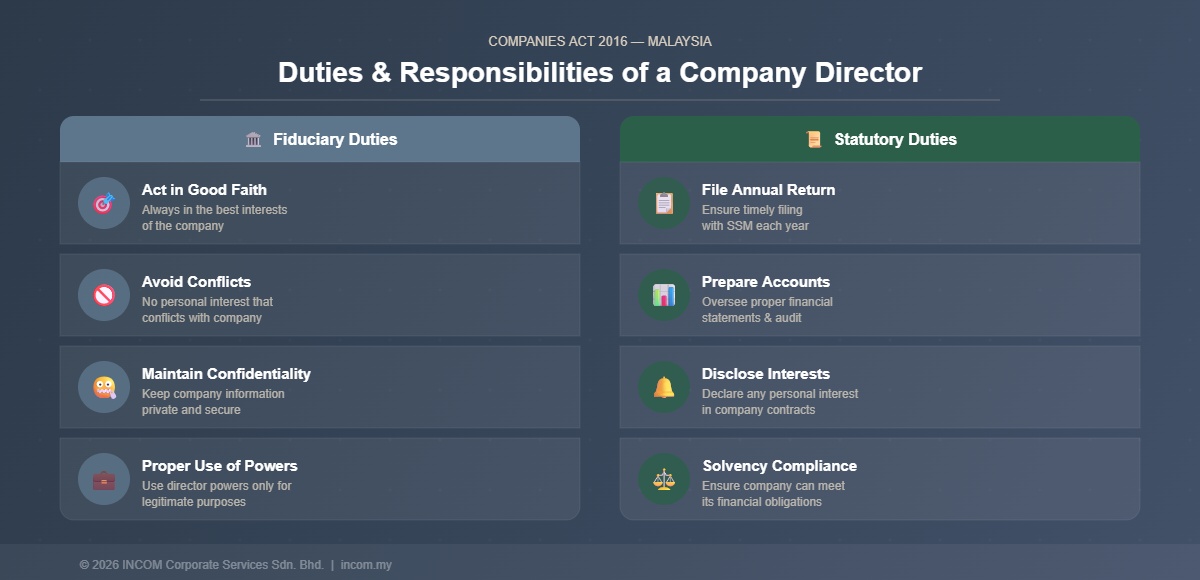
Directors of a Sdn Bhd carry both fiduciary and statutory duties under the Act. Understanding these obligations is critical — breaching them can result in personal liability.
Fiduciary Duties
- Act in good faith and always in the best interest of the company
- Avoid conflicts of Interest between personal interests and company duties
- Non-Misuse of Position & Information to make secret profits from their position as director
Statutory Duties
- Section 213(2) of the Act, exercise reasonable care, skill, and diligence in all decisions
- Not misuse company information for personal gain or to the company’s detriment
- Section 221 of the Act, Disclose any personal interest in contracts or proposed contracts involving the company
- Section 245 of the Act, Ensure proper accounting records and statutory registers are maintained
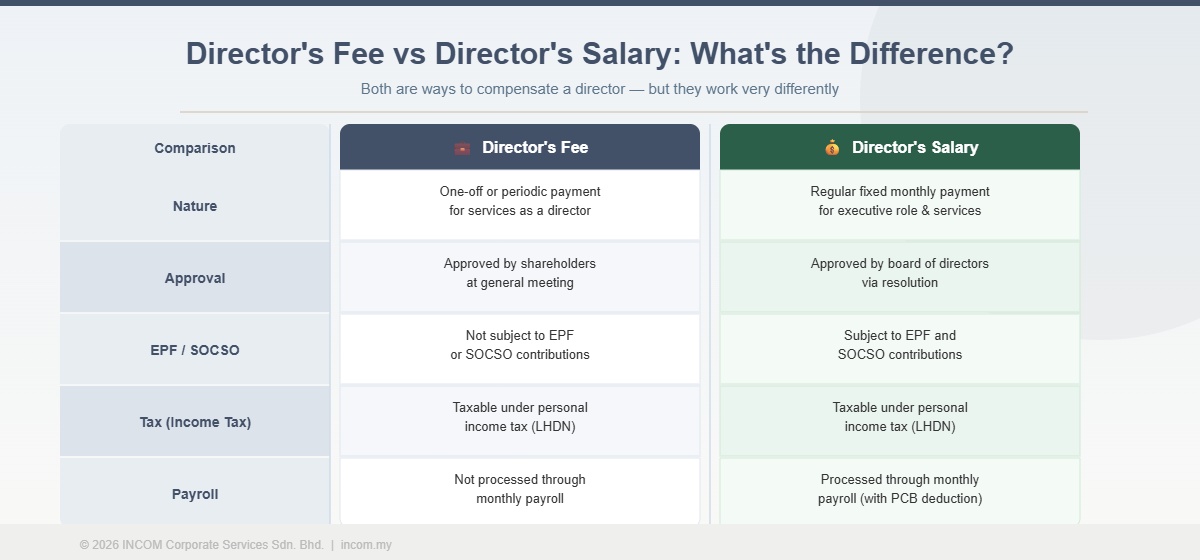
Director’s Fee vs Director’s Salary: What’s the Difference?
Many business owners confuse these two forms of director compensation. They are treated very differently under Malaysian law:
Frequently Asked Questions
What happens if I don’t file the director change with SSM?
Failing to notify SSM within 14 days is a statutory offence. The company and responsible officers can be fined up to RM 50,000, and the old director may remain on SSM’s public record.
Can I have a sole director Sdn Bhd?
Yes, as long as that director is ordinarily resident in Malaysia. If you are the sole director and wish to resign, you must appoint a replacement first.
Final Thoughts
Director changes involve more legal precision than most business owners expect — proper resolutions, statutory notice periods, correct SSM forms, and timely filing. Mistakes at any stage can expose the company and its officers to penalties or legal disputes. A qualified company secretary handles the entire process end-to-end, ensuring every change is compliant from day one.
INCOM Corporate Services handles director changes for Sdn Bhd companies across Malaysia, including urgent same-day preparation when needed. View our secretarial packages or contact us to discuss your director change needs.